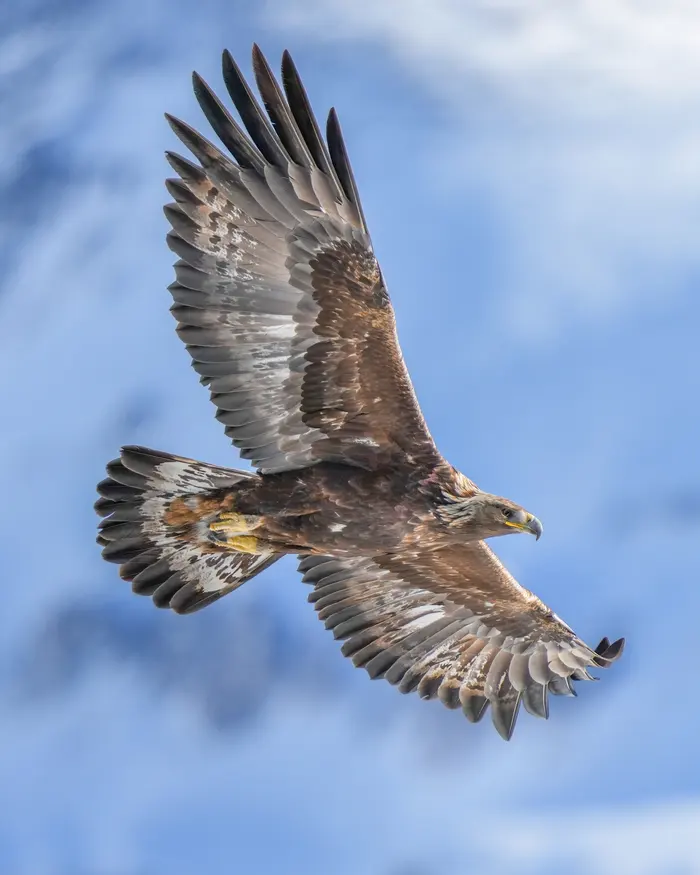
Golden eagle
Aquila chrysaetosIt nests in the canyon. Along with the vultures, it is one of the great soaring birds monitored by the Parc and the LPO, wheeling above the cliffs.
Wildlife · The wild Verdon
Where the Alps meet the Mediterranean, the canyon is a living sanctuary: eagles and vultures in the sky, a ghost fish in the river, thousands of bats in the caves, chamois on the slopes. Here are the animals of the Verdon, where to observe them, and why they are so precious.
It nests in the canyon. Along with the vultures, it is one of the great soaring birds monitored by the Parc and the LPO, wheeling above the cliffs.
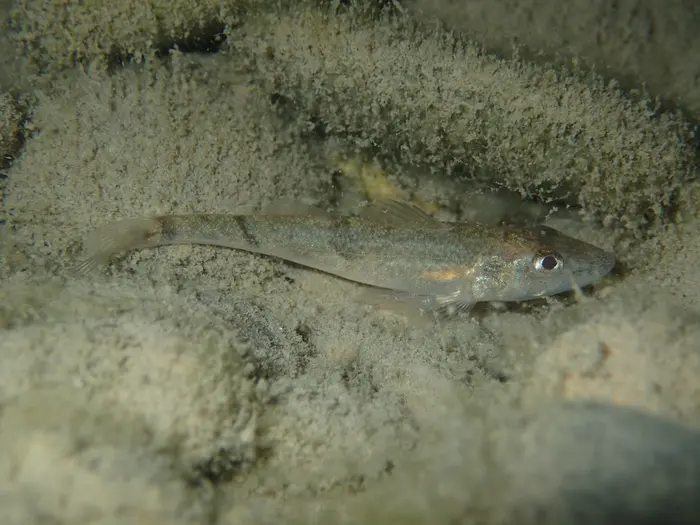
A small fish with a pointed snout, endemic to the Rhône basin alone and endangered. Rediscovered in the grandes gorges in 2001, its Verdon population — isolated by the dams — is one of the last in France.
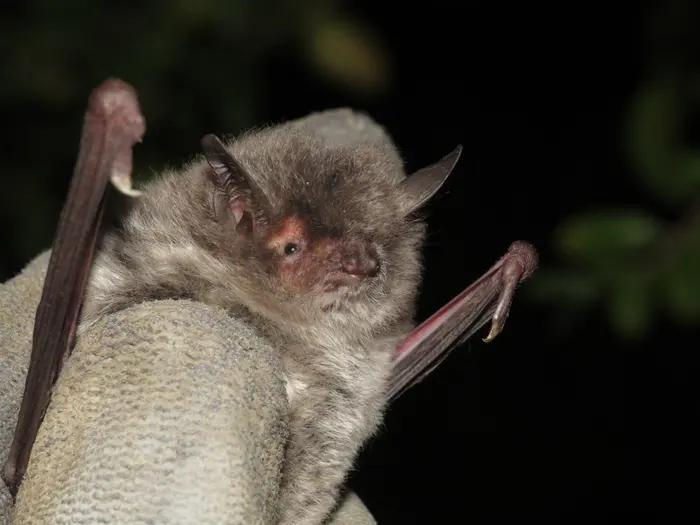
A rare Mediterranean bat that skims the water’s surface to hunt. The Esparron cave alone shelters nearly 30% of the French breeding population: more than 2,000 individuals give birth there every summer.
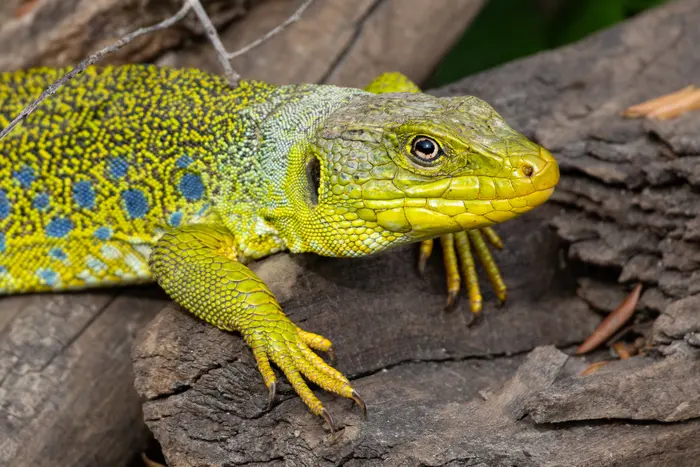
Up to 60 cm long and dotted with blue ocelli, it basks on old walls and the scree of the garrigue. Discreet, spectacular and protected.
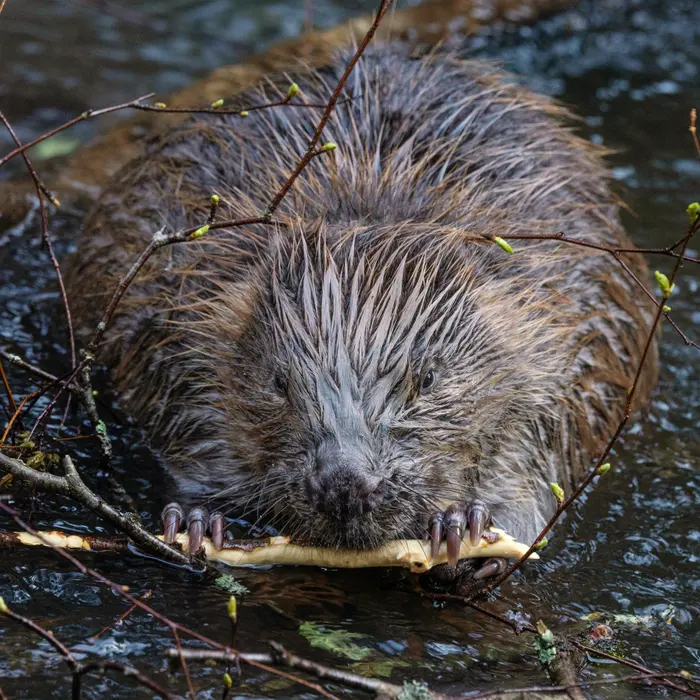
Having disappeared and then returned naturally, Europe’s largest rodent has recolonised the Verdon and its tributaries, where it shapes the riverbanks at dusk.
The vertical walls of the Verdon form an immense perch. Above the vultures, to which we devote a whole page, soars the golden eagle, which nests in the canyon, alongside the short-toed snake eagle — a migratory, snake-eating eagle — and the peregrine falcon, the fastest animal in the world in a dive. At night, it is the Eurasian eagle-owl, the largest nocturnal raptor on the continent, that reigns.
On the rock face itself live specialists: the wallcreeper, a small grey bird with crimson wings that climbs the cliffs like a winged mouse; the red-billed chough and the common raven; and the Alpine swift, the largest swift in Europe, which nests in the crevices. The Parc du Verdon has recorded some 180 bird species.
Beneath the turquoise surface lives a treasure: the apron du Rhône. This small fish with a pointed snout, endemic to the Rhône basin alone, has disappeared from more than eight-tenths of its original range. Rediscovered in the grandes gorges in 2001, it forms a population there isolated by the dams — one of the last in France. It is so threatened that a biotope protection order has watched over its habitat in the gorges since 2012, and a national action plan is devoted to it.
It shares the river with the brown trout, once queen of these waters, and a procession of fish of European conservation interest — Mediterranean barbel, blageon, European bullhead, toxostome — as well as the fragile white-clawed crayfish. On the banks, the Eurasian beaver, naturally returned, shapes the landscape; the Eurasian otter, absent for decades, has recently left fresh signs of its comeback. In the calm waters of the lower gorges hides the European pond turtle, our native freshwater tortoise.
With the first mild rains, a nocturnal chorus rises from the ponds and rock pools of the Verdon. The Mediterranean tree frog leads the singing; it shares the calm waters with the green frogs of the genus Pelophylax — including the marsh frog — gregarious and active in broad daylight, unlike most of the canyon’s other amphibians. The spined toad, the largest toad in the region, and the natterjack toad, a pioneer of temporary water bodies, migrate to the ponds as early as the end of winter. In the cool of the streams and at altitude, the common frog takes over.
More discreet still: the parsley frog, a small burrowing frog with disproportionately long legs, and the common midwife toad, whose male himself carries the eggs, wound around his legs until they hatch — a trait unique among the Verdon’s amphibians, given away at night by its fluted, bell-like call. In damp undergrowth and beneath streamside stones lives the fire salamander, black with bright yellow markings, toxic to its predators. These eight species have been monitored since the early 2000s by the Parc naturel régional du Verdon, the LPO PACA and the Conservatoire d’espaces naturels PACA, with repeated sightings at Castellane, Rougon, Trigance, Aiguines and Moustiers-Sainte-Marie.
The limestone is riddled with caves, and the caves are full of life. The Parc du Verdon shelters twenty-two bat species — out of the thirty-two found in France — of which fifteen frequent the gorges. The star is the long-fingered bat, a rare fishing bat that skims the water to catch insects and fry. The Esparron cave, in the lower gorges, alone shelters nearly 30% of the species’ French breeding population: more than 2,000 bats give birth there every summer. Also found there are Schreiber’s bent-winged bat, the greater and lesser mouse-eared bats, the barbastelle and the horseshoe bats. All are protected, and a biotope protection order watches over their roosts.
Away from the cliffs, the oak and pine forests and the garrigue shelter most of the terrestrial wildlife: roe deer, wild boar, red fox, red squirrel, and the chamois, which has colonised the canyon’s rocky slopes. Higher up, towards the Haut-Verdon, the marmot whistles across the alpine pastures. Since the 1990s, the grey wolf has been back in the region, quietly recolonising it.
On the reptile side, the star is the ocellated lizard — the largest lizard in Europe, up to 60 centimetres long and dotted with blue ocelli —, which basks on old walls and scree. It shares the garrigue with the green lizard, the wall lizard, two harmless grass snakes (the grass snake and the viperine snake) and the asp viper, the only viper in the Verdon.
This richness is no accident: it is protected. The Parc naturel régional du Verdon runs six Natura 2000 sites, and several species benefit from strong protections — biotope protection orders for the apron du Rhône (2012) and the long-fingered bat (2009), and a national action plan for the apron. Even insects count: the Jersey tiger moth, the marsh fritillary, the stag beetle and the great capricorn beetle are among the species that justified the canyon’s protected status.
Many of these species are protected and sensitive to disturbance, especially in spring: raptors and vultures nesting on cliffs (some climbing routes are closed during the breeding season), bats in their caves, the apron in the riverbed. Keep your distance, keep dogs on a leash, do not enter caves, and respect the waymarking and the protection orders. Observe and photograph — never capture or feed.
In the sky, vultures and the golden eagle wheel above the canyon; chamois live on the rocky slopes; on sunny walls and scree, the ocellated lizard, the largest lizard in Europe. The river shelters trout and rare fish such as the apron du Rhône, and the limestone caves house thousands of bats. The best time to observe wildlife is early morning and late in the day, with binoculars.
It is a small fish endemic to the Rhône basin, endangered with extinction: it has disappeared from more than eight-tenths of its original range. Rediscovered in the grandes gorges of the Verdon in 2001, it forms a population there isolated by the dams, among the last in France. Its habitat has been protected in the gorges by a biotope protection order since 2012, and it benefits from a national action plan.
Yes — the four vulture species of Europe frequent the canyon, following a reintroduction programme launched at Rougon in 1999. We devote a whole page to them: see “The vultures of the Verdon”.
The grey wolf has been back in the region since the 1990s, quietly recolonising it — Provence-Alpes-Côte d’Azur is the French region where it is most present. Sightings remain exceptional: the wolf avoids humans.
The chamois has colonised the canyon’s rocky slopes; it is best observed early in the morning and late in the day, on the steep slopes, from the Route des Crêtes or the trails. Binoculars and patience make all the difference.
Yes, it is a major territory: the Parc du Verdon shelters twenty-two bat species, out of the thirty-two found in France, of which fifteen frequent the gorges. All are protected. The Esparron cave, in the lower gorges, is one of the most important breeding sites in France for the long-fingered bat.
Yes: at least eight amphibian species are documented in the canyon and its surroundings — the Mediterranean tree frog, the marsh frog and other green frogs, the spined toad, the natterjack toad, the common frog, the parsley frog, the common midwife toad and the fire salamander. They live in ponds, streams and damp undergrowth, with repeated sightings at Castellane, Rougon, Trigance, Aiguines and Moustiers-Sainte-Marie since the early 2000s (Parc naturel régional du Verdon, LPO PACA, CEN PACA).
The external sources this page relies on, one click away.We would rather you be able to contradict us than ask you to take our word for it.
National reference system for species and protected areas: distribution, protection and conservation status of fauna and flora.
Association in charge of monitoring and reintroducing the vultures in the Verdon, which initiated the climbing restriction periods for the nesting season.
The area’s managing authority: regulations by environment (land, aquatic, vertical), bivouacking and camping, fire, drones, advice from the Park rangers.
3 of these 3 links responded during our last automated check, on 2026-10-02. A broken link is removed, never left in place.