History & heritage
The history of the Verdon
For 400,000 years, people have lived in the Verdon. A Roman colony at Riez, medieval perched villages, Vauban’s fortifications, a faience-making tradition renowned the world over, the first crossing of the canyon in 1905, a lake created from scratch in 1973: here are the great periods that shaped this territory — explained simply, and verified.
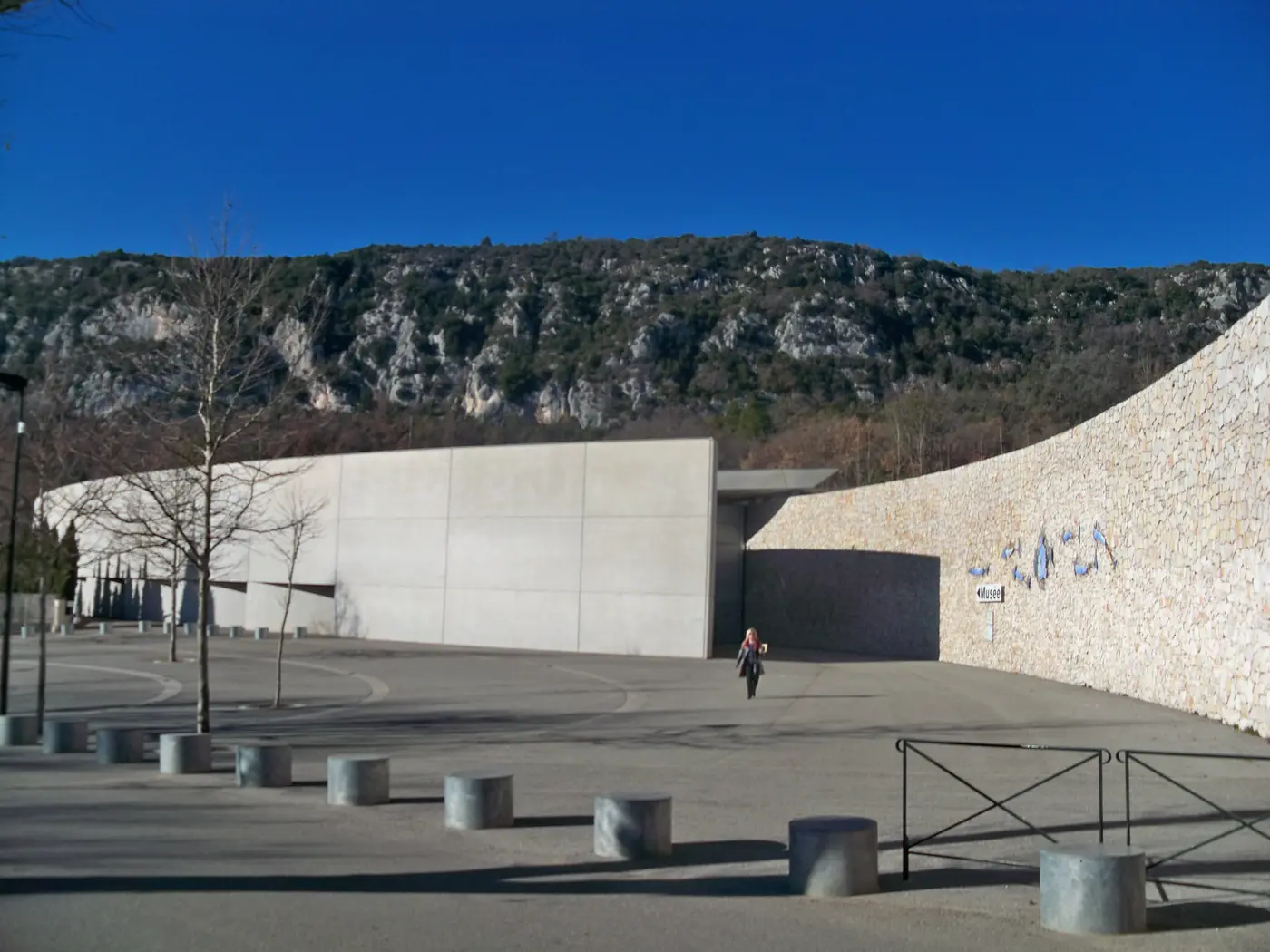
The prehistory of the Verdon
The Baume Bonne cave at Quinson, 400,000 years of human presence, and one of the largest prehistory museums in Europe, designed by Norman Foster.
Discover →The key dates of the Verdon
- ~400,000 years ago
The first occupants settle in the Baume Bonne cave, at Quinson: the start of an almost continuous human presence through to the Neolithic.
- 1st century · Antiquity
Under Augustus, Riez becomes a Roman colony — Colonia Julia Augusta Apollinaris Reiorum — a crossroads between Aix and Fréjus.
- 12th–13th century · Middle Ages
Villages perch themselves on the heights and fortify: Rougon, Bargème and Trigance take on their defensive castral silhouette.
- 1679
Pierre Clérissy becomes the first master faience-maker of Moustiers-Sainte-Marie, launching a renown that endures to this day.
- 1692 – 1696
On the orders of Louis XIV, Vauban fortifies Colmars, a border town with Savoy since 1388.
- 11 – 15 August 1905
Édouard-Alfred Martel and the Rougon schoolteacher Isidore Blanc make the first full crossing of the grand canyon.
- 1973 – 1974
The filling of Lake Sainte-Croix submerges the village of Les Salles, rebuilt on higher ground.
Roman Antiquity: Riez
Under Augustus, Riez becomes a colony under Latin rights — Colonia Julia Augusta Apollinaris Reiorum — at the crossroads of the routes linking Aix and Fréjus, as early as the 1st century. Today this is attested by four monolithic granite columns and their architrave, remains of a tetrastyle temple probably dedicated to Apollo, along with a 5th-century Early Christian baptistery — built over former baths, with an octagonal plan inscribed in a square — one of the few buildings of this type preserved in Provence.
The Middle Ages: perched villages
From the early Middle Ages onward, settlements moved to high ground for defence. Rougon has borne a castral site since the early Middle Ages, with remains from the 12th-13th centuries and already 350 inhabitants in 1301. Bargème, at 1,097 metres of altitude, is commonly described as the highest village in the Var — a feudal village built around the Château des Pontevès. Trigance still has a fortified 12th-century château, once the fief of the lords of Demandolx.
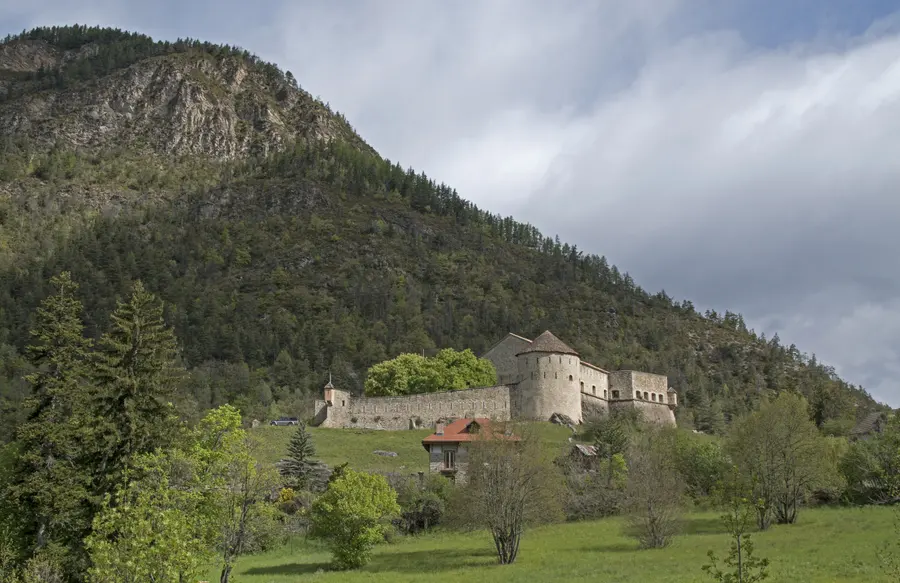
Colmars-les-Alpes, a Vauban town
Colmars was a border town with Savoy for more than three centuries (1388-1713), with its first fortifications as early as 1382. In 1692, Louis XIV tasked Vauban with strengthening the stronghold; the works, led by the engineer Niquet, restored the town wall and added five bastioned towers. The Fort de Savoie (1693-1696, upstream) and the Fort de France (also known as Fort Calvaire, downstream) still flank the town.
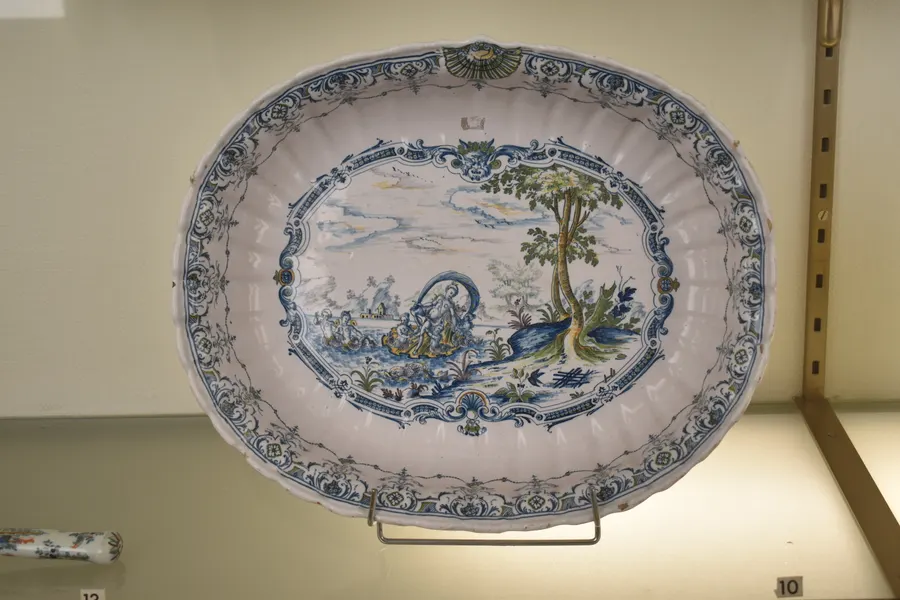
Moustiers-Sainte-Marie and its faience
Moustiers faience has been renowned since the 17th century: Pierre Clérissy became its first master faience-maker in 1679, with his famous cobalt-blue decoration on a white background. Above the village, a star suspended between two cliffs keeps alive a legend — that of the knight of Blacas, taken prisoner on a crusade in the 12th century, who is said to have vowed to hang it there if he returned alive. No historical document confirms this. The star has been replaced about ten times over the centuries.
1905: the first crossing of the canyon
Before 1905, the floor of the grand canyon remained largely unknown. On 11 August 1905, the hydrogeologist and speleologist Édouard-Alfred Martel, commissioned by the Ministry of Agriculture to study water resources, entered the Couloir Samson. He was guided by Isidore Blanc, a Rougon schoolteacher and naturalist who knew the terrain like no one else. Four days later, the team reached the Galetas: the first full crossing of the grand canyon. A trail was laid out there in 1928 by the Touring Club de France, named the “sentier Martel” from 1930, then renamed the “sentier Blanc-Martel” in 2005 in tribute to the two men.
1973: the birth of Lake Sainte-Croix
The filling of the Sainte-Croix dam began in August 1973 and was completed on 15 November 1973; the lake took about 17 months to fill completely, until April 1975, and came into service from 1974. The double-curvature arch dam, around 95 metres high, creates a reservoir of around 22 km² and 760 hm³. Les Salles-sur-Verdon, a former village of around 120 inhabitants, was submerged — destroyed and then rebuilt on higher ground: it is the only village submerged by this development.
Frequently asked questions
Since when have people lived in the Verdon?
For around 400,000 years, according to the oldest levels of the Baume Bonne cave at Quinson. The details of the periods and excavations are in our dedicated page, “The prehistory of the Verdon”.
Why are the villages of the Verdon perched on heights?
For defensive necessity: in the Middle Ages, communities settled on high ground, on castral sites that were easy to watch over and defend. Rougon, Bargème (commonly described as the highest village in the Var, at 1,097 m) and Trigance with its 12th-century château still bear this characteristic silhouette.
Who first explored the Gorges du Verdon?
The hydrogeologist and speleologist Édouard-Alfred Martel, commissioned by the Ministry of Agriculture, accompanied by the Rougon schoolteacher Isidore Blanc, who guided the expedition. Setting out from the Couloir Samson on 11 August 1905, they reached the Galetas four days later: the first full crossing of the grand canyon. The trail laid out in 1928 has been called the “sentier Blanc-Martel” since 2005, in tribute to the two men.
When was Lake Sainte-Croix created?
Its filling began in August 1973 and was completed on 15 November 1973; the lake took about 17 months to fill completely, until April 1975, and came into service from 1974. The submerged village of Les Salles was destroyed and then rebuilt on higher ground — it is the only village submerged by the lake development.
What remains of the Roman era in the Verdon?
At Riez, founded as a Roman colony under Augustus in the 1st century, four monolithic granite columns from a Roman temple (probably dedicated to Apollo) still stand, along with a 5th-century Early Christian baptistery — one of the few buildings of this type preserved in Provence.
Check for yourself
The external sources this page relies on, one click away.We would rather you be able to contradict us than ask you to take our word for it.
- POP — open heritage platform (Ministry of Culture)pop.culture.gouv.fr
Official database of French heritage (Mérimée, Palissy, Mémoire): Historic Monuments, protected objects and their legal status — the reference for checking whether a building is listed or registered.
- Verdon Regional Nature Parkparcduverdon.fr
The area’s managing authority: regulations by environment (land, aquatic, vertical), bivouacking and camping, fire, drones, advice from the Park rangers.
Both links responded during our last automated check, on 2026-10-02. A broken link is removed, never left in place.