Prehistory · History of the Verdon
The prehistory of the Verdon
At Quinson, in the lower gorges, a cave preserves the trace of 400,000 years of almost continuous human presence: the Baume Bonne. Since 2001, one of the largest prehistory museums in Europe, designed by architect Norman Foster, has displayed its collections right next door. Here is this long history, explained simply — and verified.
The Baume Bonne cave
Overlooking the Verdon at Quinson, the Baume Bonne cave preserves one of the longest sequences of human occupation known in France: a human presence attested from around 400,000 years ago (a high-end hypothesis suggests up to 500,000 years), continuing almost without interruption through the Lower and Middle Palaeolithic, the Mousterian (the Neanderthal period, with a Levallois flaking technique), the Upper Palaeolithic, then the Cardial Neolithic.
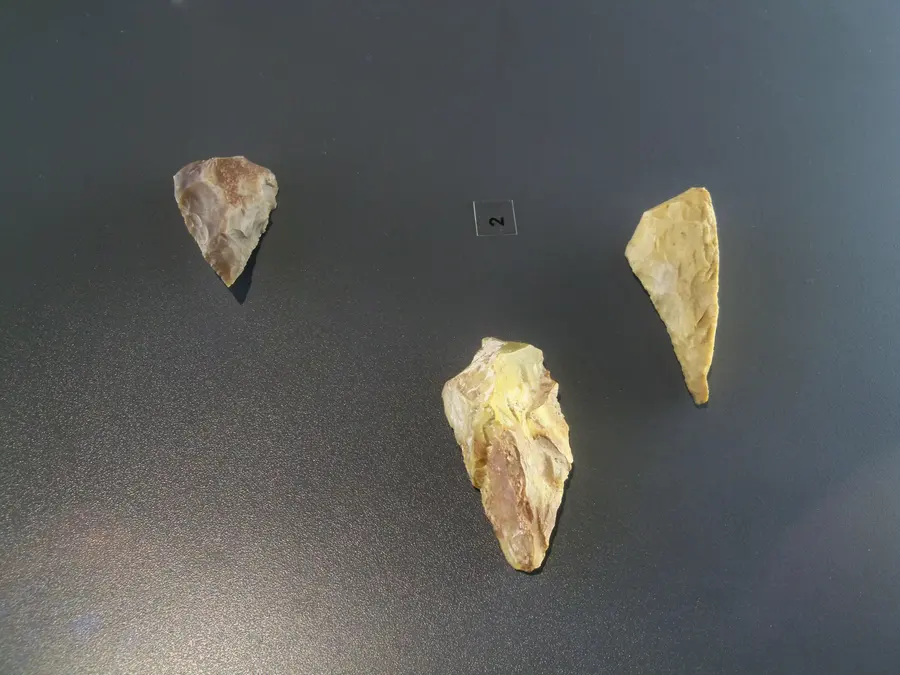
The mastery of fire is attested there between 300,000 and 350,000 years ago. The oldest levels yielded hand axes attributed to Homo erectus; the Mousterian levels, a Neanderthal presence. In total, more than 90,000 objects have been unearthed.
The excavations, campaign after campaign
- 1946
Bernard Bottet reveals the site and leads the first excavation campaigns (until around 1956).
- 1957 – 1968
Henry de Lumley resumes the excavations and refines the stratigraphic sequence.
- from 1988
A new campaign under Claire Gaillard, then Jean Gagnepain (until 1997-98).
- 7 April 1992
The Baume Bonne is registered as a Historic Monument.
The Museum of Prehistory of the Gorges du Verdon
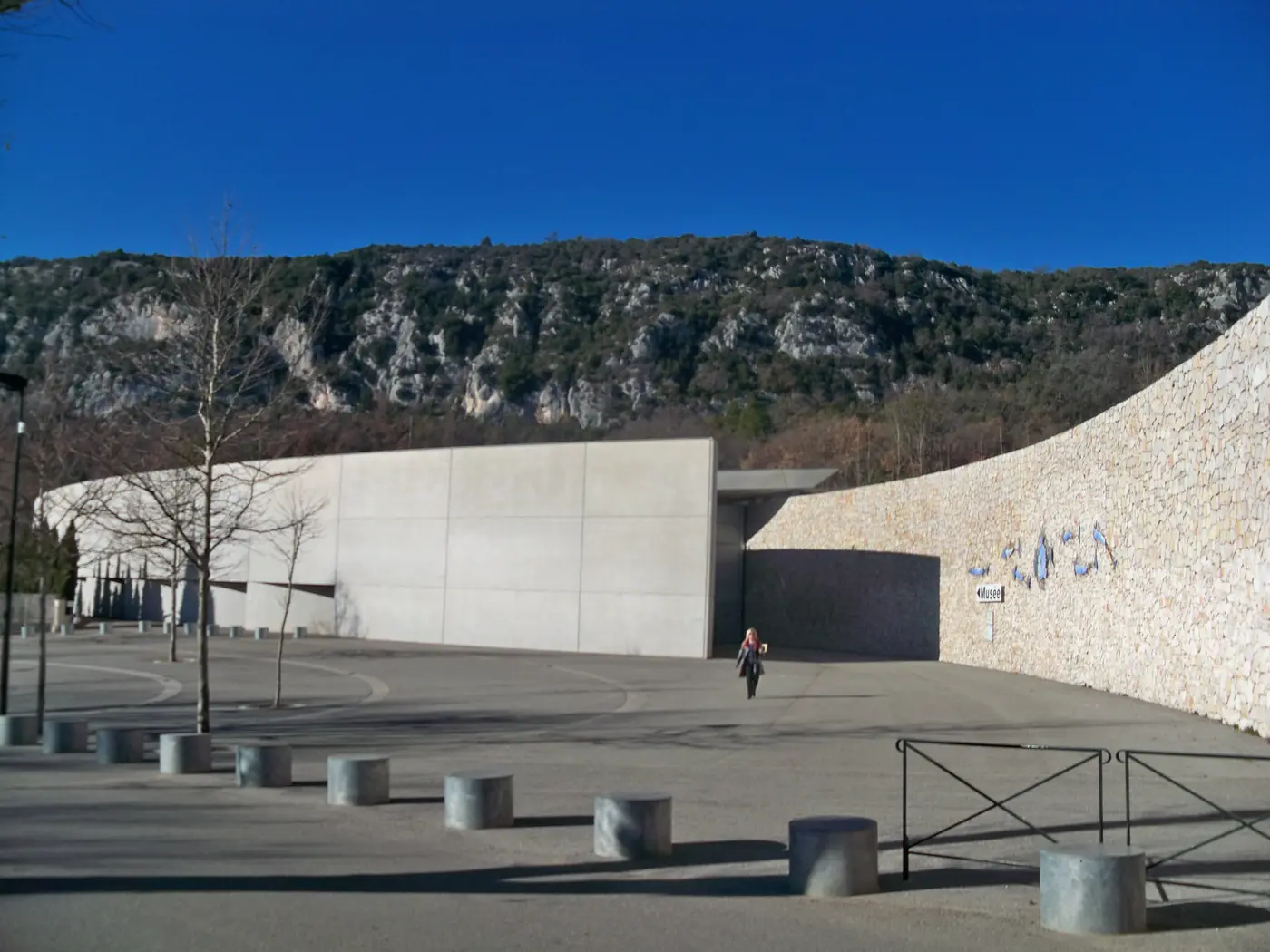
Opened to the public on 28 April 2001 (official inauguration on 1 June 2001), the Quinson museum occupies a building designed by the British architect Norman Foster (Foster + Partners, competition won in 1992), with museography designed by Bruno Chiambretto. At 120 metres long and 4,274 m² spread over two levels, it ranks among the largest prehistory museums in Europe — labelled Musée de France.
Its collections bring together nearly half a century of excavations carried out at some sixty archaeological sites in the Verdon, including the Baume Bonne itself.
The Préhistosite: a life-size village
Between the car park and the museum, the Préhistosite reconstructs five dwellings and a dolmen, at full scale, so visitors can cross nearly two million years of human history in a short walk.
The oldest known trace of human habitation, reconstructed life-size.
Contemporary with the first occupations of the Baume Bonne.
The lightweight dwelling of prehistory’s last hunter-gatherers.
The age of Provence’s first farmers and herders.
A collective burial typical of Neolithic Provence.
The Baume Bonne cave has been registered as a Historic Monument since 7 April 1992. Like any archaeological site, it cannot be visited freely outside the routes organised by the museum — nothing is to be removed from it.
Frequently asked questions
Since when have people lived in the Verdon?
For around 400,000 years, according to the oldest levels excavated in the Baume Bonne cave at Quinson (a high-end hypothesis suggests up to 500,000 years). It is one of the longest sequences of human occupation known in France: the Lower and Middle Palaeolithic, the Mousterian, the Upper Palaeolithic, then the Cardial Neolithic follow one another there almost without interruption.
Where can you see the prehistory of the Verdon?
At the Museum of Prehistory of the Gorges du Verdon, in Quinson, opened to the public on 28 April 2001 (official inauguration on 1 June 2001). The building, designed by architect Norman Foster, brings together the collections from half a century of excavations across some sixty sites in the Verdon. Next door, the Préhistosite offers five reconstructed dwellings and a dolmen, life-size.
Is the Quinson museum the largest prehistory museum in Europe?
It is one of the largest prehistory museums in Europe (120 metres long, 4,274 m² over two levels) — the sources do not allow us to state that it is the largest.
Who excavated the Baume Bonne cave?
Bernard Bottet, who revealed the site in 1946 and led the first campaigns; Henry de Lumley, who resumed the excavations from 1957 to 1968; then Claire Gaillard and Jean Gagnepain, who relaunched the research from 1988. More than 90,000 objects have been unearthed.
Can you visit a prehistoric village in the Verdon?
Yes: the Préhistosite, between the car park and the Quinson museum, reconstructs five life-size dwellings — from a stone circle 1.8 million years old to a Neolithic hut — as well as a Provençal dolmen.